
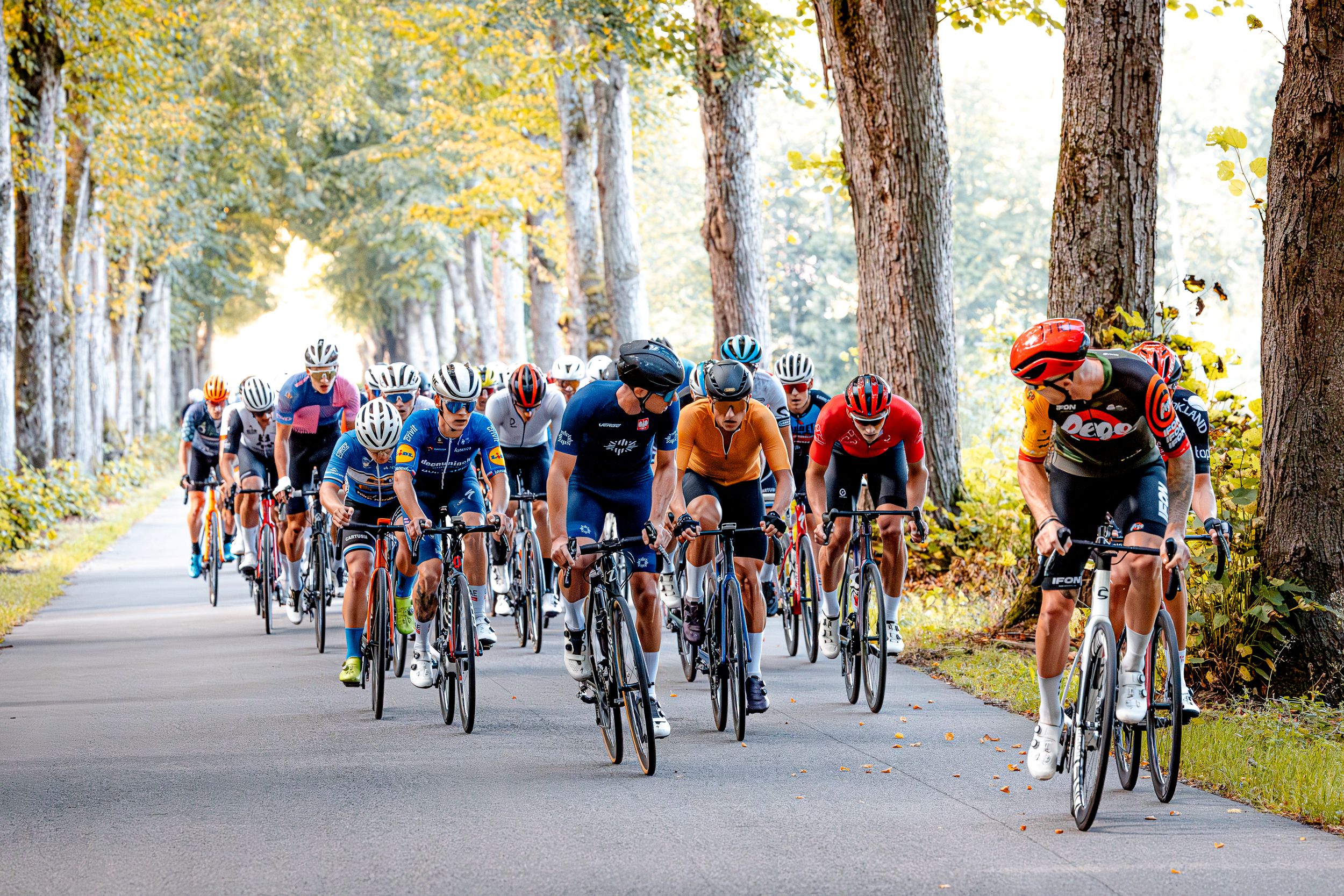
For many riders, starting an amateur race is their first experience of riding in a large, tightly packed group. A peloton can move fast, dynamically, and with riders positioned very close to one another, which means it requires not only good physical condition but also an understanding of the rules that apply to everyone in the group.
In the ORLEN Lang Team Race series and the ORLEN Tour de Pologne Amateurs – Ryszard Szurkowski Memorial, both experienced amateurs and riders who are just beginning their racing journey line up at the start. That is why it is worth becoming familiar with the basic principles of riding in a peloton before the race. Knowing these rules makes the competition safer and the riding itself more enjoyable.
A peloton functions like a single organism. Every rider is a part of it, and each person’s behaviour affects the safety of others. The most important principle is predictability. There is no place in a peloton for sudden movements, abrupt changes of line, or uncontrolled braking. Smooth and stable riding allows the entire group to move fluidly, even at high speed. A rider who maintains a steady pace and line is predictable for others and therefore safer for the whole group.
When riding in a peloton, it is important to look further ahead than just the rear wheel of the rider in front of you. Beginners often focus only on the closest point, which causes delayed reactions to what is happening in the group. It is better to look several metres ahead and observe the behaviour of a larger part of the peloton. This allows you to notice changes in pace, braking, or obstacles on the road earlier. In a peloton, anticipating a situation is always safer than reacting too late.
Communication between riders is extremely important. Information about obstacles on the road is passed along the group. If there is a pothole or a manhole cover on the asphalt, it should be signalled with a hand gesture or a short verbal warning. A simple gesture pointing to the hazard allows riders behind you to prepare to avoid it. In a large peloton, such signals are passed on by subsequent riders and quickly reach the back of the group.
Braking in a peloton should always be smooth. Sudden braking creates a domino effect – each rider behind must react more abruptly than the one in front. For that reason, it is best to first slightly reduce speed and only then apply the brakes if necessary. Signalling that you are slowing down is also important, especially when the group is moving at high speed.
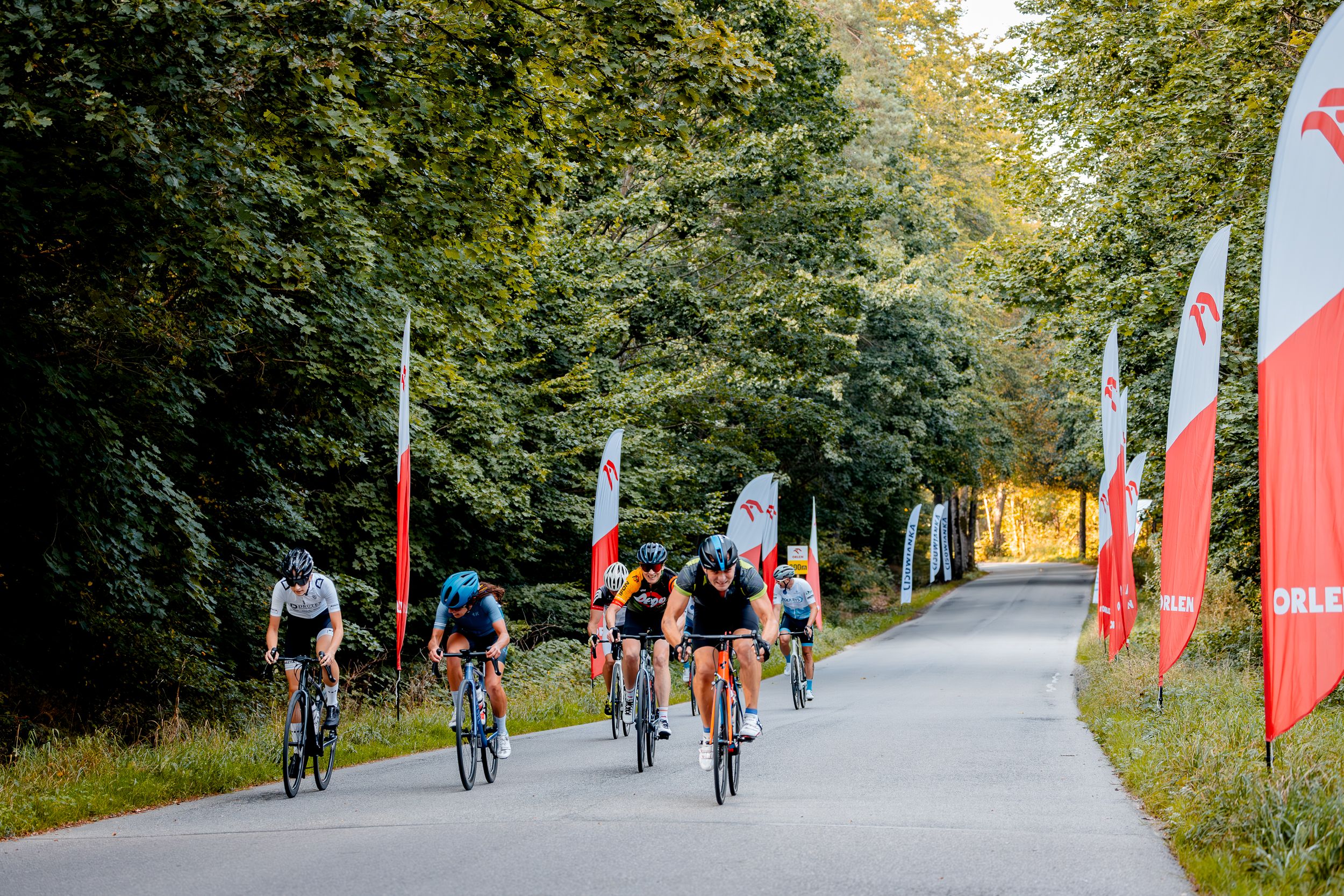
One of the fundamental principles of safe riding is maintaining a straight and stable line. The bike should move steadily, without sudden shifts to the left or right. Even a small deviation can lead to wheel contact between riders. That is why calm and smooth riding is so important in a group.
Changing position within the peloton should be done gradually and with awareness. Forcing your way between riders or accelerating suddenly in the middle of the group can create dangerous situations. If you want to move forward or change your line, it is best to do it smoothly and only when there is enough space.
It is also important to be careful when standing on the pedals. When a rider stands up – for example on a climb – the bike naturally moves backwards by a few centimetres. If someone is riding very close behind, this can lead to wheel contact. Before standing up, it is a good idea to make sure there is a small gap behind you and to perform the movement smoothly. It can also be helpful to signal the move, for example with a slight elbow movement.
Corners require particular attention because the peloton naturally becomes more compact when entering a turn. The safest approach is to reduce speed before the corner and ride through it calmly while maintaining a stable line. Sudden braking in the middle of a turn may surprise riders behind you.
Cycling competition is about rivalry, but it is also about shared passion and mutual respect. Good cycling habits – warning others about hazards, riding predictably, and respecting the space of fellow riders – make the race safer and more comfortable for everyone. In a peloton, every rider is responsible not only for themselves but also for the safety of those riding beside and behind them.
Taking part in the ORLEN Lang Team Race series and the ORLEN Tour de Pologne Amateurs is a great opportunity to experience the atmosphere of a real cycling race and to challenge yourself on demanding routes in the beautiful regions of Poland.
ORLEN Lang Team Race 2026 Calendar
- May 16 – Hotel Arłamów
- August 8 – BUKOVINA Resort (ORLEN Tour de Pologne Amateurs – Ryszard Szurkowski Memorial)
- September 19 – Bytów